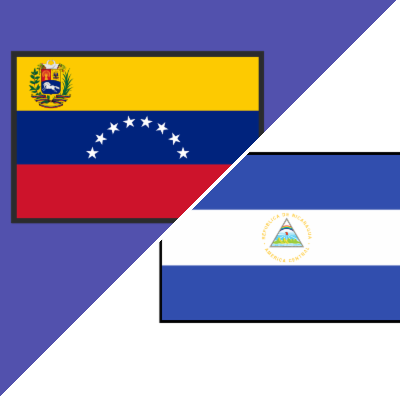
Venezuela & Nicaragua: United Against Western 'Colonialism'? A Dual Perspective
The relationship between Venezuela and Nicaragua presents a fascinating study in contemporary international relations, oscillating between declared ideological solidarity and spirited competition. While both nations often articulate a unified stance against perceived Western hegemony and "old colonialisms," their interactions also play out on different stages, such as the fiercely contested baseball diamond. This article delves into the complex narrative, examining President Maduro’s strong geopolitical pronouncements and contrasting them with a notable sporting encounter where **Venezuela Vs Nicaragua** truly came to a head.
A Shared Stance Against "Old Colonialisms"
At the heart of the geopolitical alignment between Venezuela and Nicaragua lies a shared historical narrative and a contemporary ideological framework that challenges the existing world order. President Nicolás Maduro of Venezuela has been a vocal proponent of this view, particularly in his pronouncements regarding Russia's actions on the international stage. In a significant address, Maduro declared Venezuela's "full support" for President Vladimir Putin, framing Russia's actions as a defense of peace and its homeland against what he termed the "North American empire and NATO."
Maduro's rhetoric frequently paints a picture of Western powers—specifically Europe and the United States—as perpetuating an "old colonialism" and "neo-colonialism." This narrative suggests that these powers are attempting to militarily encircle and "end Russia," thereby undermining the emergence of a "multipolar world" that is already a reality. Within this expansive narrative, Venezuela positions itself, alongside Cuba, Bolivia, and significantly, Nicaragua, as targets of these same colonialist forces. He asserts that the US, since the rise of President Putin, has systematically prepared a strategic policy to "surround, threaten and finish off Russia militarily." This perspective fosters a sense of solidarity among these nations, who perceive themselves as united against a common external threat, forging a political alliance where the dynamic is less **Venezuela Vs Nicaragua** and more "Venezuela, Nicaragua, and allies" against the West.
For more on this perspective, you can explore
Maduro's Stance: Venezuela & Nicaragua in the Multipolar World.
The Multipolar World Vision and Russia's Role
Maduro's vision explicitly champions a multipolar world order, where power is decentralized and not dominated by a single superpower or bloc. In this view, Russia, under Putin's leadership, has played a crucial role. Maduro highlighted that within a decade, particularly by 2010, Russia had successfully recovered its economic, financial, energy, and military strength, positioning itself as a "new power for peace" in this emerging multipolar landscape.
This resurgence, according to Maduro, coincided with NATO's alleged breach of prior agreements. He claims that NATO began an "offensive scheme" by expanding its military forces eastward, directly threatening Russia's security interests. This narrative effectively recontextualizes Russia's actions as defensive measures against perceived aggression, rather than unprovoked expansion.
Allegations of Western Aggression and Hypocrisy
A core component of Maduro's argument is the accusation that "imperial powers" are actively seeking to "surround Russia, point all NATO weapons at them so that at some point the conditions arise to attack and destroy them." He questioned whether the world expected President Putin to "sit by idly" in the face of such perceived threats.
Maduro further elaborated on the situation in Ukraine, specifically regarding the Lugansk and Donetsk territories. He asserted that these regions assumed the functions of "People’s Republics" to defend themselves from a "massacre" allegedly initiated by "fascist sectors" that had seized power in Ukraine. In his account, these groups were engaged in "hunting men, hunting women, assaulting families, bombing with heavy weapons." He claimed that Putin had repeatedly sought "direct dialogues" with Ukrainian rulers for understanding and conflict resolution, but that the "fascist elite" and coup groups consistently avoided diplomacy, preferring to align with plans to militarily encircle Russia and act aggressively. This narrative portrays Russia as a reluctant actor, forced into a defensive posture by Western designs and the actions of a "fascist elite" within Ukraine, a view robustly supported by Venezuela and Nicaragua.
Beyond Geopolitics: Venezuela Vs Nicaragua on the Diamond
While the political rhetoric paints a picture of ideological unity, the world stage also offers instances where nations, even allies, engage in direct competition. A vivid example of this dynamic played out in the world of sports, specifically during the World Baseball Classic (WBC), where **Venezuela Vs Nicaragua** became a literal contest of skill and strategy.
Venezuela decisively defeated Nicaragua with a score of 4-1. This victory significantly bolstered Venezuela's position, improving their record to 3-0 in Pool D and guaranteeing their advancement to the quarterfinals. The game was a clear demonstration of Venezuela's athletic prowess and deep talent pool, reflecting a different kind of national strength than the geopolitical power described by Maduro.
For a detailed account of this sporting event, read more about
Venezuela's WBC Dominance: Defeating Nicaragua on the Diamond.
Venezuela's Dominance and Future Aspirations
Throughout the group play, Venezuela showcased remarkable depth and strength across all positions, surprising many viewers. Expected to face significant challenges from formidable teams like Puerto Rico and the Dominican Republic, the Venezuelans instead brushed aside all competition. Their performance against Nicaragua, though described as more "workmanlike" than overtly dominant, solidified their status as the "hottest team in the competition at the moment." This athletic success highlights Venezuela's capacity to excel on a different kind of global stage, projecting national pride and capability through sporting achievement. The question remained whether they could translate this momentum into victory against baseball giants like the USA or Japan, but their confidence was undeniably high.
Nicaragua's Inaugural WBC Journey
For Nicaragua, participation in the World Baseball Classic marked a significant milestone: their first-ever appearance in the prestigious tournament. Despite not securing any wins throughout their run, Nicaragua consistently demonstrated a competitive spirit. In their final game against Venezuela, they showed early promise, appearing "as solid as any team in the world" through the first three innings. This spirited start underscored the difference between merely competing and sustaining excellence over an extended period. While Nicaragua didn't collapse, Venezuela's consistent pressure eventually allowed them to pull ahead and maintain their lead, bringing Nicaragua's inaugural WBC tournament run to an end. Their participation, though without victory, served as an important stepping stone for their national baseball program.
Analyzing the Dual Narrative: Unity and Competition
The juxtaposition of these two scenarios—Venezuela and Nicaragua’s declared political solidarity against Western "colonialism" and their head-to-head competition in a major international sporting event—underscores the multifaceted nature of international relations. On one hand, President Maduro's statements position Venezuela and Nicaragua as ideological allies, united by a shared anti-imperialist rhetoric and a vision for a multipolar world. This unity is rooted in historical grievances and a common geopolitical outlook, especially concerning the role of the US and NATO.
On the other hand, the baseball match provides a tangible example of peaceful, yet intense, competition between these two nations. In sports, the focus shifts from shared political grievances to individual national performance, skill, and strategic execution. Here, **Venezuela Vs Nicaragua** is not about resisting external threats but about excelling against a peer.
This dual narrative reveals that national relationships are rarely monolithic. Nations can align on crucial geopolitical issues while simultaneously engaging in fierce, yet respectful, competition in other spheres. Understanding international dynamics requires looking beyond single narratives and appreciating the various ways countries interact.
Practical Tip: When analyzing international relations, always consider the multiple contexts—political, economic, cultural, and sporting—in which nations interact. A country’s rhetoric in one domain may not fully capture the complexity of its relationships in others.
Conclusion
The relationship between Venezuela and Nicaragua exemplifies a fascinating complexity in global affairs. On the one hand, they stand united against perceived Western 'colonialism' and advocate for a multipolar world order, echoing President Maduro's strong support for Russia and his condemnation of US/NATO policies. This ideological front positions **Venezuela Vs Nicaragua** not as adversaries, but as allies against a common perceived threat. On the other hand, their encounter on the baseball diamond during the World Baseball Classic offered a contrasting narrative, showcasing a direct and intense competition where Venezuela emerged victorious. This dual perspective highlights that international relations are seldom singular; nations can be deeply aligned on political ideologies while simultaneously engaging in competitive pursuits that foster national pride and display their unique capabilities. The **Venezuela Vs Nicaragua** dynamic, therefore, is a rich tapestry of solidarity, shared vision, and spirited rivalry.